Nightmares, Pressure and Glory: Colaps journey to the top
Colaps reflects on competition, his new life, and what it takes to compete at the highest level
His track record is as follows:
- Grand Beatbox Battle 2023 Champion in the Tag Team category
- European Beatbox Championship 2023 Champion in the Draft Tag Team category
- Third place in the Grand Beatbox Battle 2023 in the Crew category
- Grand Beatbox Battle 2021 Solo Champion
- One One Battle 2021 Champion
- Second place of the Grand Beatbox Battle 2021 in the Tag Team category
- Champion of 7 to Smoke (GBB) 2018
- Champion of La Cup 2018
Among many others…
During the second week of March, I got in touch with Colaps via Instagram in order to arrange an interview. After a pleasant conversation in which the Franco-Colombian did everything on his end to make it happen, we scheduled a date and time for him to answer my questions. On March 17th at 11:00 —him at his setup, and me in a booth at my university library— I met with Colaps on the communication platform Discord.

Spanish Beatbox Reporter: How did you discover beatbox? How did your interest in this art begin?
Colaps: The very first time I heard about beatboxing was on the French TV show La Nouvelle Star, around 2006. It’s a singing contest. There was this beatboxer called Poolpo who did a very famous performance and it was crazy for me, I couldn’t believe my ears. I didn’t think I would be able to do it so I just moved on after watching the video.
Then, a few years later, during the school break in between classes, I was walking in the schoolyard and I heard noises on my right side… I turn my head and I thought “wait, I heard this before” and I remembered Poolpo’s video. Then I went to talk to him and I was like “Yo, bro, that’s really cool… How do you do that?” and he started to explain to me and that’s how we became friends through beatboxing.
We kept training together during school breaks and later. Suddenly, I was beatboxing all the time and lots of friends started to join us in this school circle. There was even one of the playground monitors who joined us and beatboxed with us. Those were fun times. Although this was just a hobby and nothing more for me, we kept practicing and showing each other new skills… we were all doing it, so it was fun.
Later I realized I was beatboxing all the time, even not at school. That’s when I thought “wait, this might be my passion actually” and from that point something turned on in my brain and I became really passionate about this discipline. From that point I started watching videos online and I discovered that there was a community worldwide and battles… and yeah, this blew my mind. From that point I… yeah, never stopped! [laughter]
S.B.: Your career began in Lyon, at the Championnat de France de Human Beatbox 2013. How do you remember your first experience?
C: That was definitely a very important moment for me. It was my first time competing and meeting the whole French beatbox community. It wasn’t the first time I met French beatboxers, the first time was 2012 in another battle called La Reine Blanche, in Paris, but in Lyon was where I met the whole French community. I was very amazed to meet people I saw online and also seeing they were so friendly and welcoming. This motivated me to push even more my beatboxing skills.
In this competition I didn’t pass the eliminations, but it was a good first experience. I believe Alem won that year. I feel like it happened yesterday, I have great memories from this event.

S.B.: Along this journey there are amazing moments, but —as in everything— there are also tough ones. Around 2016 or 2017 you were close to quitting. What happened?
I was training hard but I kept not getting the results I wanted, so slowly the motivation started to fade away. At this moment I told myself that it was a fun ride, I had some great moments, but also could move on. So at that time I actually didn’t see any beatboxers for a year. I didn’t go to any events, I even stopped beatboxing for a few months. I took this time for myself to see how my feelings towards beatbox evolved.
Then I slowly entered an event: Florida Beatbox Battle 2017. Lost against Alexinho.
Then appeared this idea of creating a beatbox crew, so that’s when End Of The Game [Colaps, Faya Braz, K.I.M., Polo and Scouilla] was born. That was very interesting. Trying another category was also a way for me to still enjoy beatboxing in a different way; different kind of creativeness.
Then I entered the French champs and I told myself “Well, if I lose early in this one, then I will stop there”. And yeah, I ended up winning in solo and in he crew category. That was a turning point. It’s crazy.
S.B.: For beatboxers who might find themselves in a similar situation, what would you tell them?
Sometimes you’re too focused on one thing. That thing for me was solo beatboxing. I was so focused, I wanted to get the results I dreamed of… and of course, when you don’t get that it can feel frustrating. You might wanna quit. I absolutely understand the feelings. What you can do is also try, for example, another category of beatboxing. That’s a good way to keep the motivation going, but in a different kind of way, and it trains you differently also. For example, for the crew you have to learn a bit more about how to work with a band, with other people.
Beatboxing is a tool, and you can do many things with it, so don’t focus only on one thing; you can also try… playing with people who play the guitar, with a band while you’re doing the drums… All that can help you develop your musicality. Or just try other categories of beatboxing, like tag team, crew or even loopstation. There are so many things you can do with beatboxing that doesn’t require to compete.
If you really want to do the solo competitions —for example— I would also say that taking breaks is important. Sometimes where you’re too focused on one thing you don’t have the overall vision.
So, in general, it’s important to have this vision of beatboxing. Beatboxing is a tool and you can do so many things with it. It would make no sense to just stop beatboxing, it has so many possibilities, it can help you in life in many ways to get different types of work… Competition is not everything.

S.B.: And resilience pays off: in 2021 you became GBB champion. How did you feel?
C: It’s one of the best feelings I ever had. Becoming a French champion it’s also up there, but when you get to the top of the world, it’s hard to describe what happens. I dreamed of this for 11 or 12 years and it’s like all those years of work suddenly give you what you always wanted. There were so many hours of hard work that went through this; many failures, some victories and in the end, it’s the result of the whole experiences I had that gave me the title.
Imagine studying for 10 years, and then you finally graduate to the job you want to do. That’s very satisfying, you know? You’re finally going to be able to move on from that.
For me it was a way also to open a new page: the next step of my career. I knew if I won GBB, lots of doors that could be closed before having this title would open: it would be easier for me to get jobs, more recognition also… It’s a full package that this gave me. Not only the satisfaction, but also a way to live, actually.
Have you noticed any change in yourself or in the way you see things?
C: I feel I’m more professional. Since I have this title, I want to live up to the expectations. What I mean is that if you are —for example— world champion, people expect something. So obviously, you have to be careful about the quality of the beats you put out. You cannot mess too much around, I guess [laughter]. I don’t put too much pressure on myself either, but I try to find the right balance.
My mentality has evolved. I felt I had more responsibilities as being a world champion. If I get a job, I want to be as professional as possible. It’s for myself, for my artistry, but also to show people that beatboxers are actually capable of very pro things. I want to show that we can give good quality with beatboxing. It’s also a way to promote the whole art form by having this attitude so that people can understand what we can do.

S.B.- Correct me if I’m wrong, but when I watched GBB 2023 I noticed a very positive change in your attitude on stage. Don’t get me wrong, your presence has always been solid, but in this event it felt like you took a step forward: you seemed more relaxed, more energetic, and maybe enjoying your time on stage even more. Was that something you intentionally worked on, or just part of your natural evolution as a beatboxer?
I didn’t intend to be any different, I just tried to be as natural as possible. It’s probably the way I was feeling at the moment that made me act like this. Also, the Tag Team category —for me— is much less stressful than the Solo category. You’re not alone, you’re sharing beats, so even if you make a bit of mistakes the other one can cover a little bit. It’s not as obvious as Solo, for example. I guess it’s a combination of how I felt at the moment and also the fact that I had less pressure on my shoulders as well. So I was able to enjoy myself more.
S.B.: We know that in your preparation for GBB —the one you won— you trained one hour in the morning and one hour in the afternoon. What did those training sessions look like?
There were several steps before I got to the one hour in the morning and one hour in the afternoon. There is not a precise timeframe, but let’s say one year before the event, I was trying to find as many ideas as possible and it’s only by beatboxing that I’m going to find them. Here there’s no limit of time actually, I just keep going on until I feel tired or if I don’t feel it on the day I don’t beatbox too much. But yeah, on those occasions, I could beatbox probably seven, eight, nine… even ten hours a day if it was possible.
Once I had my ideas —it could be ideas of textures, patterns, combos, lyrics, or a theme to develop— I started developing them. It’s a bit more precise work that I’m doing now, trying to structure everything. For this phase I would say the amount of time can be about the same. Seven, eight hours maybe.
Once I’m happy with my structures I need to repeat, repeat and repeat to see if I’m able to execute the whole thing. If I am, I ask myself, can I do the same while standing and holding a microphone and moving? Because it changes a lot actually. If I just perform acapella without moving or if I’m moving and I’m holding a mic, trying to give energy, it’s going to change the whole execution.
From that point this is where we get to the one hour in the morning, one hour in the afternoon. At this point I try to go through all of them. So: round one, round two, round three, etc. If there is no mistake, I just move on but if there is a mistake I just repeat the round until I get it perfectly. So sometimes I could go beyond one hour, especially in the beginning, but as I got closer to the event, I didn’t make so many mistakes anymore, so I was able to just do the full round straight. This helped me also to not feel too tired, and not stress my muscles too much, because I was beatboxing less in the end —when we were closer to the event—; I was saving energy and my execution remained the same.

S.B.: You once said you experienced stress on the GBB 19. Now that you’ve gone through it, what advice or trick would you give to our readers who might be dealing with stressful situations?
I still stress when I perform, but I think it’s a normal thing. Sometimes it’s easy to get stuck in the thoughts, then your thoughts keep looping and as they loop they get stronger. It’s like a tornado. So I feel like the more importance you give to your thoughts, the stronger they will get by time. I think the key is to stay grounded, stay present in the moment.
You can do some breathing exercises before going on stage. I like to write small sentences on my phone and read them before going on stage. This phrases would be like “Not listen to your thoughts”, “Stay here” “it’s going to be okay”… Just trying to reassure yourself. Try to think it’s just going to be a performance, you’re not going to die and in one year, you will barely remember what happened, so there’s no reason to stress about it.
Try to have fun on stage instead of turning it into a bad experience. Because from the moment you do that, everything is going to go wrong. You will have dry mouth, you won’t feel good on stage… So yeah, the best is to think positively.
To be honest, there is no secret recipe for this, I think things that work for me would maybe not work on someone else. It’s really up to each person to try. So it goes through experimenting. You have to do stages, and maybe try something different each time before you go on stage and then see how do you feel during and after the performance.
S.B.: Honestly, —even now that you’re not competing— it feels like you’re constantly at your best. How do you keep improving and maintain that level of creativity non-stop?
I just train a lot. [laughter] Even though I’m not competing it doesn’t mean I’m not training. I keep following the scene very closely actually and I train secretly. I’m quieter, but I’m training as hard as before. Not seven hours a day, but there can be days where I train for three or four hours without any problem.
Another factor is that now I also have to make a living. I was lucky for GBB because I lived at my mom’s place and that meant there was a weight off my shoulders because my mom is here, she takes care of me… So I was focused on training. Now I live in Japan, I have to make a living and paying rent, etc. So of course there are more things I need to take care of so I can’t focus that much on beatboxing, but I’m still very focused. I would say I’m now more focused on making tracks, but tracks that appeal to the beatboxer audience, also to a broader audience, I mean, non-beatboxers. My goal is always to improve. If I feel like I stop improving, I get a bit anxious, so I keep pushing. And who knows, maybe one day I’ll return to GBB.
My goal anyways is always to level up in beatbox. If I’m feeling like I’m not leveling up anymore, I would panic a little bit because I train so much that for me it’s just normal. I keep leveling up. And yeah we never know, maybe one day back to GBB, we never know.
S.B.- When talking about technique, Colaps is definitely a reference. How have you managed to push your technical level so high?
That’s a good question, I’m not even sure myself.
I guess first I listened to other beatboxers and tried to imitate what they do. I’m really bad at imitating so I end up doing my own version of the technique. That helped me develop my style. I was always a fan of very technical beatboxers like Alem, Skiller, Beasty… I always enjoyed more the intricate aspect of beatboxing. I enjoyed less the melodies also because for the first seven or eight years of beatboxing I didn’t use my voice that much, so I was really focused on the rhythmical aspect.
This also comes from my background: I did a bit of drum and my grandpa was also a drummer, so I come from a very rhythmical family. I love anything that’s rhythmic. I love to try to count and understand what’s going on in the beat, so I think I naturally developed an affinity for technique in beatboxing. Now it just went through a lot of hard work, obviously.
In the beginning I was trying to imitate what Alem was doing, for example, so a lot of Tks and this kind of stuff. So I slowly learned all the little sounds you need to achieve these kind of techniques and as the time went, I developed my own techniques as well, which were a bit more me, not that much copy. So a lot of click sounds, dry kick, throat click… And I just tried to push my limits, so when I have an idea I start doing it very slow and with time I just try to go as fast as possible with it. So in the end people think it’s crazy, so I’m happy.
I just try to push the limits of my execution. It’s also about the consistency of the sounds. I try to go hardcore and stay consistent. That’s how I developed, I guess, it’s not super clear even for me. I just try stuff [laughter].
S.B.: However, your style isn’t just about technique—you combine it with originality and musicality. How do you find that balance between all the elements that make a routine stand out?
To be honest I just do what I love. I don’t think too much about the balance. I think the balance component came naturally with time. In the beginning I made very unbalanced stuff, focusing only on percussion. Then I found out that I could use my voice, so I used the voice component, but maybe I used it too much. So I think over time I was able to refine through experimenting, listening to other beatboxers while trying to understand when do they put the bass, when do they put the voice, etc. It’s a lot by learning from others and also by experimenting myself.
Also, on stage I try to see how my mix —when I say mix, I mean if my kick is too strong compared to my snare, all these kind of things— feels. By doing that, the balance will come naturally. I don’t try to think too much about the balance, it’s more like a natural feeling now. I try to sound like music basically, and by trying to sound like music I ended up being more balanced.
When it comes to originality, I think it comes with time too. Just experimenting as well. I try not to listen too much to other beatboxers —except when there’s something with a lot of hype coming out— because I’m already facing beatbox so much. I have to judge so many competitions, so yeah, I think I have enough beatboxing in my ears. That’s also a way for me to stay original and true to myself, because that way I can find my own things.

S.B. — Which artists —inside or outside of beatboxing— have influenced your style the most?
C: Alem and Skiller were really important to me. Dharni also, because he has done work on his textures that seems like he was a time-traveller. A few years back he was already doing stuff that people do today, he was a visionary. He influenced me a lot on my way to think about beatboxing because I remember he was so picky about small details that I didn’t even pay attention to. This really opened my mind.
When it comes to music, I love to listen to Yussef Dayse. Tony Royster too; I used to watch videos of him when I was really young and he was already making crazy stuff. So overall, drumming guys, they both are insane drummers.
In terms of music genres, it’s very wide what I listen to. It can go from Drum and Bass to Jazz, contemporary stuff too, rap… I get inspiration from everywhere, really, it’s very wide.
And now, outside of beatboxing, I would say Israel Adesanya. Even though it’s not related to music, but he really helped me during my GBB preparation. He’s an UFC fighter, and he released some documentaries about the preparation to become the world champion. We became world champions the same year, so I felt a massive connection.
And now, outside of beatboxing, I would say Israel Adesanya. Even though it’s not related to music, but he really helped me during my GBB preparation. He’s an UFC fighter, and he released some documentaries about the preparation to become the world champion. We became world champions the same year, so I felt a massive connection.S.B.- After so many years traveling, competing, winning almost everything there is to win, and dedicating countless hours to beatbox, what continues to motivate you today?
C: I think it’s the vision I have of beatboxing, I can never feel like I don’t want to improve. My mentality it’s like this, I feel the need to improve all the time, because for me, not levelling up feels scary, if I feel like if I’m not levelling up anymore I’m starting to feel a bit bad. So because I’m scared of that feeling and I really don’t want that to happen, I just keep pushing myself and beatboxing. It’s also a way to learn about my body, the way it works. It’s an inner discovery journey, I’m learning how to use my body.
I feel like I still have so much to learn about, especially now that I had to judge the GBB26 wildcards: I’ve heard so many techniques that I’ve never heard before so it’s another proof that I’m just at the tip of the iceberg. We don’t know how much more we can develop, so that’s also the mystery that keeps me wanting to always improve. If I stop training hard today, I will be a very different beatboxer in 10 years than if I still go hard, so I can remain the same level for 10 years, or even gradually level up. I want to be part of that gradually leveling up movement. I feel like it’s also a community thing: we are all explorers of what we can do with our voices, so I get motivated by everyone I listen to when I hear something I’ve never heard. It’s so interesting, I like it, it’s like… exploration.

S.B.- Do you plan on competing again?
Never say never. I want to leave the door open for now, because I feel I’m still in shape. Right now I have other priorities, but when things settle down, let’s see…
S.B.- What do you think defines the line between dedication and obsession, and how have you learned to maintain that balance?
I feel like obsession is a bit unhealthy. When something gets too much in your head and you can only think about this… Well, that happened to me! On GBB21 preparation I was just obsessed: you wake up in the morning, you think about GBB, you go to sleep thinking about GBB, you can even dream about GBB. I had dreams about GBB! Being on stage, losing in my dreams, then I wake up, I’m sweating. I had some kind of nightmares like this. This was the obsession aspect, I was too focused… but it’s also what I think you need to participate on GBB. You need to be obsessed. Even if it’s unhealthy, only the guys with the craziest obsession would really go far in the event.
On the other hand, dedication is something more healthy. I’m dedicating my life to beatboxing and that means I breathe beatbox, I eat beatbox… But it’s not in a bad way, it’s like building an ecosystem. There’s my fun time with beatboxing, my working time with beatboxing… So overall, dedication is something healthy, and obsession can be unhealthy.
S.B.- This question is a bit more personal: I’d like to ask not about Colaps, but about Julien. What does Julien do in his daily life?
My daily life… Well, a normal day would be: I wake up, I work out a little bit; now since I’m living in Japan, I’m learning Japanese in the morning, then I have my daily beatbox training, which usually lasts two hours, so it’s more related to “Colaps”. In the afternoon I work a lot on “Colaps”, it can be my YouTube channel, it can be recording a video, making my next track… this stuff.
In my free time, what I like to do is going out with my wife, have a walk, visit a new place, have a little trip in Japan… I also like to play videogames. Right now I’m playing Expedition 33. I just finished playing Hades 2 and the next one I’m planning to play is Hogwarts Legacy, the Harry Potter game. I also plan to buy God Of War Ragnarök. I played a lot of games, actually, I used to be a big gamer when I was younger, I even had a problem with it: I was playing like 12 hours a day [laughter], my mom was really angry at me. Right now, of course I play a lot less, I play 3 hours maximum per week. So yeah, it’s very small but I still enjoy it.
Another thing I like is anime. I love One Piece, in fact I’m watching the live-action lately, it’s not so good, but it’s One Piece so I’m still watching. Other animes that I like… Ippo, Baki, Kimetsu no Yaiba (Demon Slayer), Attack on Titan, Dragon Ball, Hunter X Hunter… I’ve seen so many, actually… so yeah, that’s me.
S.B.- Moving to Japan is, to say the least, a big leap. What made you take that step?
The first time I came to Japan was 2022. I didn’t know so much about the country, but I was already a fan of the kind of music they made, so I really loved the Japanese sonorities in general. Shakuhashi, shamisen… I already had affinity with this music because I was sampling this kind of stuff on beatmaking. I also liked the esthetics of the samurai and the temples even though I never went, I only saw stuff online. There was a game called For Honor where were several factions and there’s the samurai, I always took samurai. So, whenever there was a possibility in the games to go for something Japanese, I go for it.
Then, I went there, and… it’s like going to another planet. I don’t know how to describe it, you have to experience it. There are so many things in advance compared to other countries. I was mind-blown many times here. The beatbox scene is big here also. And then I met my future wife —now my wife— so it felt like stars aligned for me to go to Japan, I felt like the world was telling me to go to Japan somehow.
I didn’t have to force, you know, it just came to me. It felt logical to go to Japan, because work-wise it’s better for me, my wife is here, I love the food… I love so many things here.
S.B.- Now that you’ve been there for a year, how would you evaluate this new stage of your life?
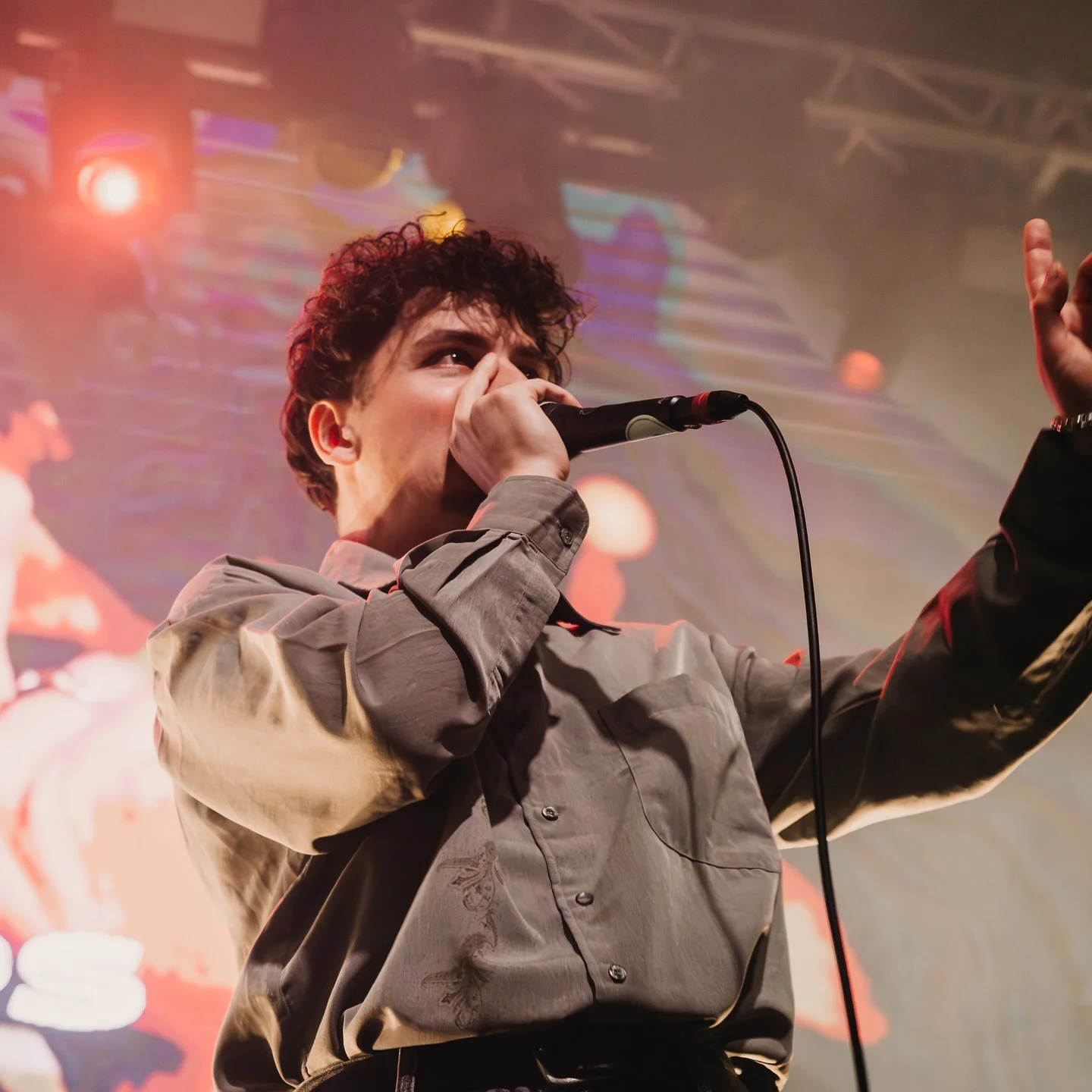
C: Better than I thought, because obviously it’s a bit frightening to leave your country and go to the other side of the planet, especially when you don’t speak the language and you don’t know if you’re gonna get a lot of opportunities. In the beginning I was very stressed, I didn’t know if it was going to be the right move for me, but everything slowly fell into place.
The start was a bit slow, so I didn’t have many things to do. Then I went to some events, made some contacts, so work was slowly starting to come. So I tried to develop my network in Japan, which I think I still have to do, but I’m getting enough opportunities now to make a good living. It’s just by putting myself out there and trying to promote my stuff, meeting people… Yeah, so that’s what happened; I’m very happy in the end and it turned out even better than I thought so.
S.B.- Do you have any future projects you can tell us about?
C: Well, I’m always working on new Beatbox tracks, so you can expect new tracks this year. Apart from that, I’ve been starting a new project with an orchestra. We’re playing mainly music of movies, so it can be Hans Zimmer. I’m also more connected now with the dance scene, so I started a project with contemporary dancers. I’m also planning to create a band with musicians, not beatboxers, so I have a few projects going on. My goal is to remain active in the beatbox scene, but also develop other fields. These are my projects, I’m trying to build an ecosystem of possibilities.
S.B.- How has beatbox influenced your personal life? Has it changed anything in you or in the way you see the world?
C: It helped me to be less shy over the years. I had a huge shyness problem. I’m still a bit introverted, but it’s not like before where I had a hard time talking in public, or for example, when there was people I didn’t know I felt a bit paralyzed. I didn’t know how to act. So I think meeting the beatbox community has helped me open myself to people, to the world.
S.B.- Is there any message you’d like to share with our readers? This is your moment.
C: Enjoy yourselves. Not only in beatbox but in life. It’s important to have fun and not taking everything too seriously, because we’re all going to die anyways, so you know, rather have a good time than a stressful one.
Escrito por:

Joan Garcia
Compartir
Últimas noticias